Wednesday, January 8, 2014

What our speech reveals about us - use of pronouns

Happy New Year!  One of my goals is to write more consistently on this blog - so check back weekly to see what I'm thinking/writing about.

Several years ago my boss said something I still often think about:  our use of pronouns reveals a lot about us.  Do we say "I" or "we," "my" or "our."  When I hear someone talking about his or her job, or church, or even family, I'm tuned in to the use of pronouns.  So if someone says "at my job they . . ." it tells me the person doesn't really feel a part of the company.  They don't feel a sense of belonging.  Whereas, saying "at my company we . . ." shows the person does feel a part of the company. How do you talk about your place of employment?

For couples, some always say "we" and some always say "I."  This can be confusing either way, because then I'm never sure if the spouse is referring to just him/herself, or to both of them.  I invited a friend to a baby shower, and she replied "we will be there."  Hmmm - I didn't invite any men so I had to clarify her "we."  It turns out she always says "we."  This is lovely and shows a real sense of togetherness in the marriage, as opposed to married couples who always use "I."  

As parents we sometimes refer to "your" child, when obviously the child is "ours."  We usually use "your" when we want to distance ourselves from the child's behavior.   "Your son didn't take out the garbage."  The implication is that my son would have done it--strangely enough he is the same person!

Think about it.  And tune in to speech, your own and others' speech.

What do you think?

Friday, November 22, 2013

What do you do while awaiting a publisher?

I am now in an unenviable position -- waiting.  Waiting is not something we humans enjoy.  In fact, we hate waiting.  We don't like to wait in line; wait for a check; wait for a date; wait for a job; wait for news from the doctor; wait for our child's report card; wait for our birthday.  We encourage our kids to be patient, but we are often poor examples of patience.

So now that I have an agent (hooray) I am once again waiting.  The book itself took over six years to write.  So I should have learned patience by now, one would think!  I'm still learning, and not very well.  I read a very insightful blog the other day, and have taken that advice to heart.  Actually, the advice was about what to do if you queries are being rejected, which isn't my situation at the moment.  But the advice was this:  keep querying; self publish; write another book (Rachelle Gardner, Books and Such).
Product Details
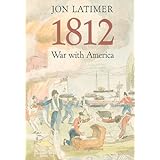
I don't need to keep querying, as my agent is working on finding a publisher.  I don't want to self-publish.  So, I'm starting my next book.  And I'm getting excited about it already.  I'll carry over some of the characters, and actually both story-lines.  But the bulk of the action will be in the U.S., and the setting is the War of 1812.

So today I picked up several books in my campus library.  I'll spend the next 6-12 months reading and researching, and then begin what I may call . . . Legacy.

Any other ideas about what to do while waiting for a publisher??

Stay tuned.

Tuesday, October 29, 2013

Words and short phrases students love . . . and professors loathe

Those of us who grade essays see similar words and phrases repeated in many of our students' papers.  We have grown to groan when we see these phrases littering our students' essays.  I will begin the list below, but please add a comment with your least favorite phrases!

"Nowadays" - it might not be so bad if they spelled the word right -- actually, it would still be bad.  It adds no meaning to a sentence.  I've seen such creative spellings nowadays as "now in days," "now and days," and "now a days."

"In which" - another often unnecessary short phrase.  Often it makes no sense in the context of the sentence in which it is written.

"That" - this is just one of my pet peeves.  I tell my students half the time they use it incorrectly, to refer to a person, and the other half of the time it's unnecessary.  This is only a slight exaggeration.  I encourage them to avoid using 'that' in their writing.

"Back in the day(s)" - wow, this is pretty useless.  One of my colleagues, who teaches history, tells his students to avoid "Star Wars" phrases like "a long time ago in a galaxy far, far away."

"Being that" - another phrase I dislike.  I cross it out and write 'as.'

Please add a comment and add your least favorite student-favored words!

Thursday, October 17, 2013

What is fiction?

When teaching Composition 1, most of the texts we read are essays taken from an anthology.  But every semester I teach "The Lottery."  In case you're not familiar with it, I'll give you the basic plot.  A small town in New England holds a lottery every year, at the end of June.  Every family member must pick a slip of paper from a black box, one of which has a black dot on it.  The 'winning' family then returns to the box, and every member picks a slip of paper.  The 'winning' person, at the end of the story, gets stoned to death.  This is the most anthologized short story, and while dark, it is a great read and unleashes great discussions in class.  Shirley Jackson wrote it in 1948, with the recent Holocaust and her own negative small-town experiences forefront in her mind. 

Before we discuss "The Lottery," I ask the class -- what is fiction?  Invariably, the first responses include "not real," "not true," "made up," and "fantasy."  These responses really bother me!  Why?

To me, fiction is very real.  It rings true.  A character may be based on a historical ("real") person or not, but his or her ethos reflects reality.  In the best fiction, the characters are so lifelike, you feel like they could be a neighbor.  For me, I feel like I could sit down with them over a cup of tea.  While the events and the people inhabiting a novel may not be real, they are lifelike, and their lives resonate with truth.

What is fiction to you?

Saturday, October 12, 2013

Don't give up!

After a hiatus of almost a year, I'm back to this blog.  Thanks for reading.

If you've read my blog before, you know I've been working on a historical novel since 2006 about the daughter and sister of Olaudah Equiano.  Equiano was kidnapped from Africa at the age of 11, enslaved, and after he purchased his freedom, he settled in England and wrote his memoir, The Interesting Narrative of the Life of Olaudah Equiano.  While researching my thesis I came upon his memoir, and promptly fell in love with Equiano.

After finishing my thesis, I thought, what a great basis for a book.  I started with his daughter, Joanna, attracted to the themes of race, abolition, alienation, and to the setting of London.  After doing some research, and wanting more depth and conflict in the book, I added Equiano's sister, about whom almost nothing is known.  The two storylines developed, and after seven years of research and writing the book, Remnant, was complete.

But as all you writers know, writing is never finished.  One can always improve prose by adding a passage, or changing a word, or lengthening a description, or even by deleting a scene.

For one year I have sought an agent, and I'm happy to report, I have finally found one!  I am thrilled to have found a Christian agent.  Just as God's hand is evident throughout Remnant, His hand is also evident throughout my life, and I'm excited about this next step on the road to publication.

Keep checking this blog for updates on the pursuit of a publisher.  And for your own long-held dreams and goals, keep striving.  Don't give up.

Tuesday, November 20, 2012

Is cursive writing still important?

Twice in the past two days students have approached me about writing a persuasive essay/speech about teaching cursive writing (or script) in school.  They are both 'for' the teaching of script, but many schools no longer teach handwriting.  I have heard from several teachers lately, and parents of children in elementary school, that cursive writing is no longer being taught in schools.  Instead, children are taught how to use the computer and typing (or rather keyboard) skills.

Don't get me wrong, I think typing skills are very important.  Taking a typing class my last semester in college was one of the smartest things I have done, and it has helped me acquire a few jobs.  However, I do believe that hand written notes and letters are special, and valuable, and an art that I hope will not be lost to the next generation, and generations to come.  So I hand write thank-you notes, and letters, and invitations, and condolence notes.  How often do you use handwriting . . . and what do you use it for?

Monday, November 5, 2012

Recovery mode

We have power, and now my school website and Blackboard are back online so I can work.  I have never been so happy to grade essays in my life.

Little by little, street by street, corner by corner, the lights are coming back on.  And with the restoration of power the city is slowly coming back to life.  There are still many nearby stores and restaurants closed, and my local bank was still closed earlier today, but there are more and more signs of life.

Tomorrow I'll attempt to find a gas station with no, or a very short line; I'll vote for my president; I'll swing by Dunkin' Donuts and hope they are open; and I'll grade papers -  ahhh, normalcy never looked so good!